Dr. Veronika Mikhailova
Human-Centered Research · Media Psychology · UX · Emerging Technologies
I am a researcher working at the intersection of media psychology, user experience (UX), and communication science. My research focuses on understanding human experiences, perceptions, and behavior in the context of communication and emerging technologies.Working closely with interdisciplinary teams, I have explored topics ranging from XR and telepresence robots to generative AI. Whether evaluating a prototype or studying an established technology, I aim to understand the human perspective behind the data.

Get in touch
About
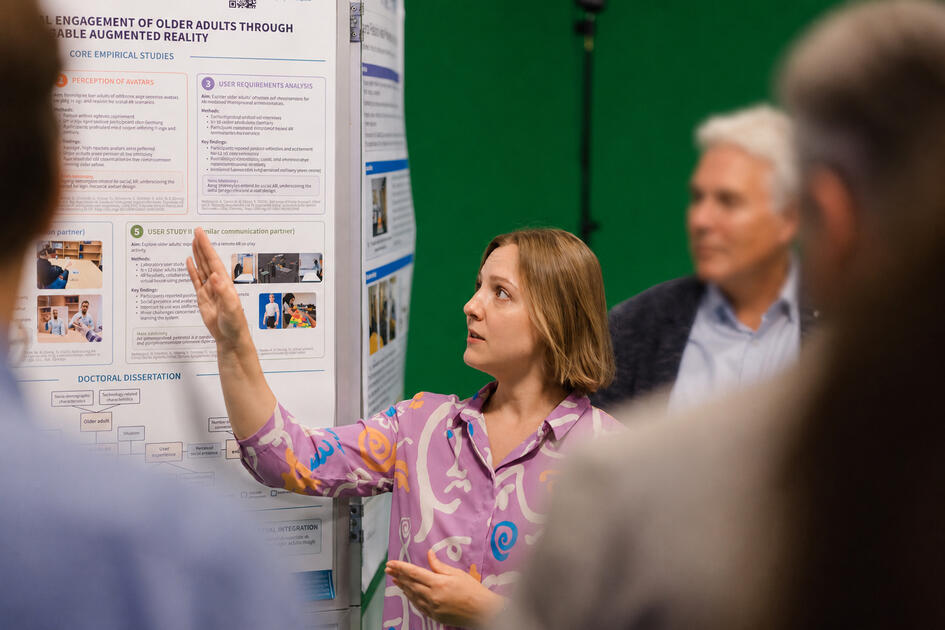
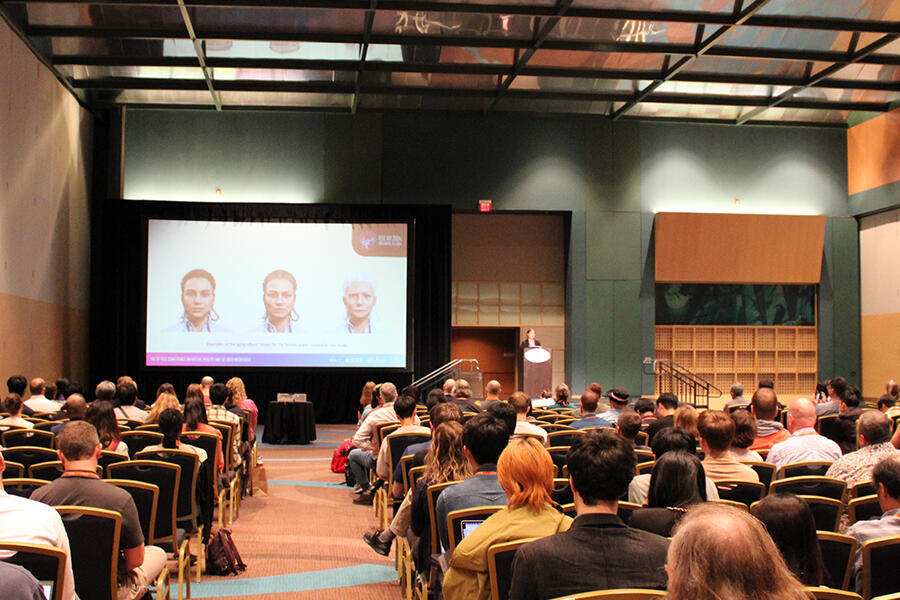
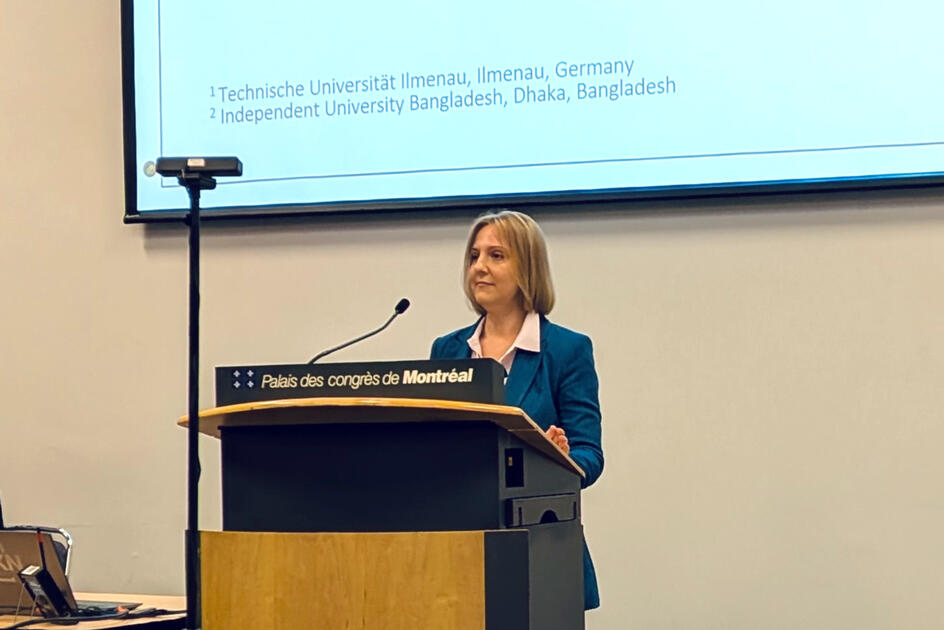
At a glance
PhD in Communication Science, Technische Universität Ilmenau (Germany)
Research Associate, Media Psychology and Media Design Group, Technische Universität Ilmenau (Germany)
15+ peer-reviewed publications
7+ international conference presentations
Qualitative, quantitative & mixed-methods research
University teaching & student supervision
Research interests
Human-Centered Research · Media Psychology · User Experience Research · Digital Innovation · Digital Communication · Technology Adoption
Research expertise
Interviews · Focus Groups · Surveys · Experiments · Usability Studies · Mixed Methods · Statistical Analysis · Thematic Analysis
Awards & Certificates
Portfolio
Featured research project:
Supporting Social Engagement of Older Adults through Wearable Augmented Reality
Overview
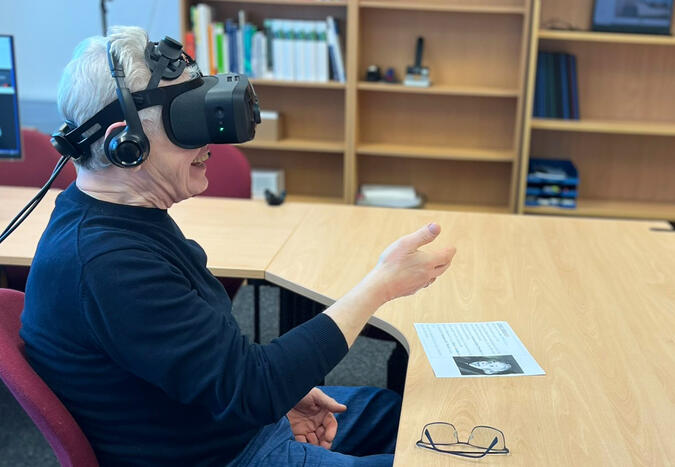
Over five years, I worked as part of the interdisciplinary CO-HUMANICS project (Co-Presence of Humans and Interactive Companions for Seniors; funded by the Carl-Zeiss-Stiftung), which aimed to develop novel communication technologies for older adults. My work focused on the evaluation work package, leading the human-centered research behind the design and evaluation of wearable augmented reality (AR) communication systems.
The project brought together researchers in communication science, media psychology, computer science, human-computer interaction, and engineering.
My role
Designing research questions and study protocols
Selecting appropriate qualitative, quantitative, and mixed-methods approaches
Recruiting and instructing older adult participants
Conducting interviews, surveys, experiments, and usability studies
Analyzing qualitative and quantitative data
Translating findings into user requirements and design recommendations
Presenting results to interdisciplinary project partners and at international conferences
Research journey
Phase 1: Understanding existing evidence
Research question:
What is currently known about older adults' experiences with wearable augmented reality?Methods:
Systematic scoping literature review (PRISMA-ScR)✦ Key contribution:
Identified major research gaps, summarized opportunities and challenges, and highlighted the importance of designing wearable AR systems around older adults' needs rather than technology alone.
Phase 2: Understanding user perceptions (Avatar representation)
Research question:
How do people of different ages perceive realistic avatars for remote communication?Methods:
Online experiment (2,086 participants)✦ Key contribution:
Demonstrated that age and avatar realism influence user perceptions differently across age groups, providing evidence for more age-inclusive avatar design.
Phase 3: Identifying user needs and requirements
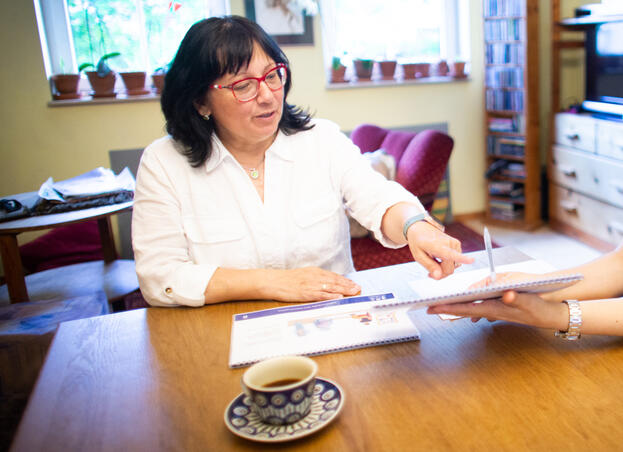

Research question:
What do older adults expect from an AR communication system before using one?Methods:
Semi-structured interviews (30 participants, storyboard evaluation)✦ Key contribution:
Identified emotional, social, technological, and administrative requirements that informed the subsequent design of the communication system.
Phase 4: Evaluating the first prototype
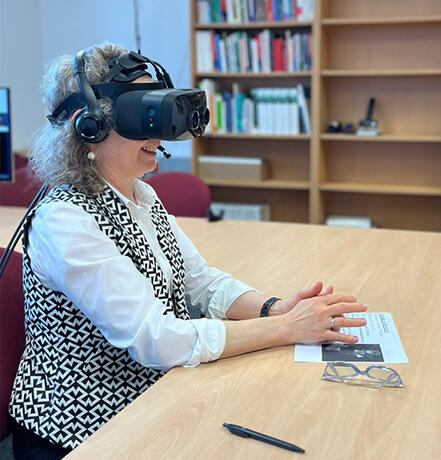
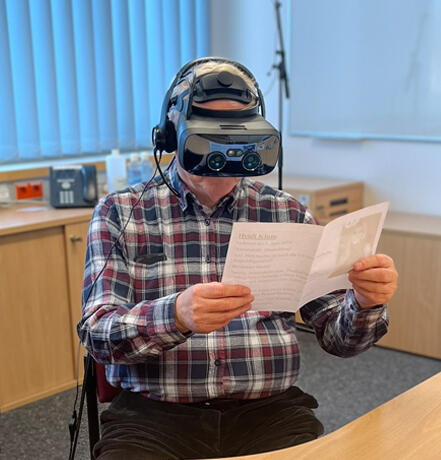
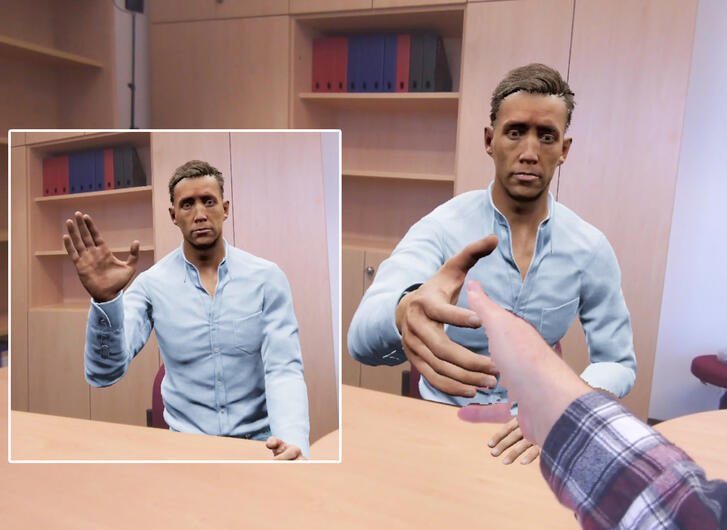
Research question:
How do older adults experience communicating through a wearable AR prototype?Methods:
Laboratory usability study (16 participants)✦ Key contribution:
Evaluated UX, engagement, social presence, usability, and acceptance of an early communication prototype, identifying opportunities for improving interaction quality and comfort.
Phase 5: Evaluating the final prototype
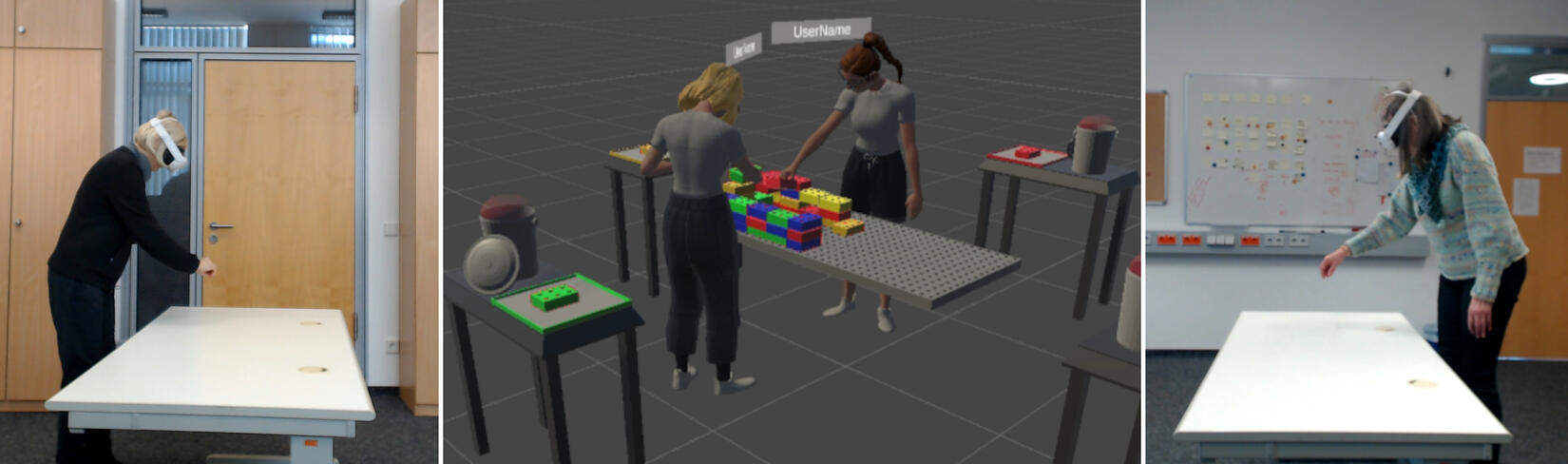
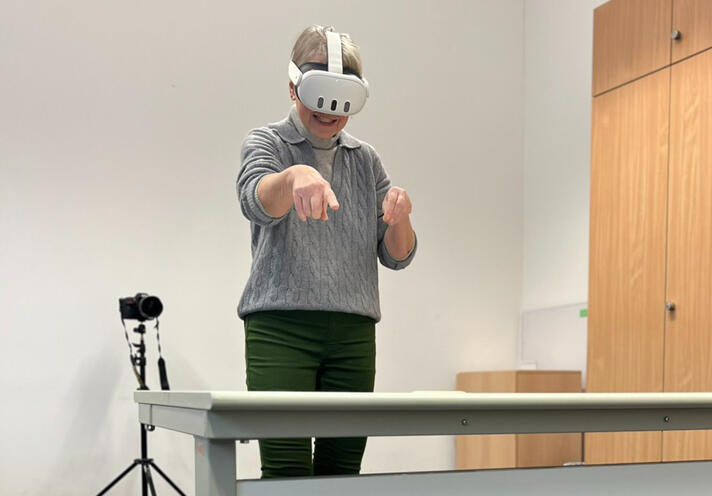
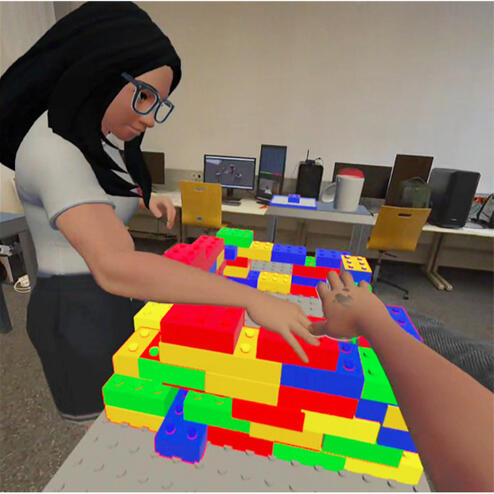
Research question:
How does wearable AR support collaborative communication between familiar partners?Methods:
Laboratory usability study (12 partnered participants)✦ Key contribution:
Investigated collaborative communication using personalized avatars and demonstrated the potential of wearable AR to support engaging and socially meaningful remote interaction.
Project impact
The project combined multiple complementary research methods to support the development of a wearable AR communication system from concept to evaluation. Findings informed design decisions, guided iterative prototype improvements, and generated evidence on how users perceive, experience, and adopt emerging technologies.
Beyond this specific project, it demonstrates how human-centered research can reduce development risks, uncover unmet user needs, and enable more informed product decisions.More insights from each study are available at the project page of the Media Psychology and Media Design Group at TU Ilmenau.
Publications
Peer-reviewed articles
Mikhailova, V., Shidujaman, M., & Döring, N. (2026). Myself, reimagined: Users’ perspectives on authentic self-representation through avatars in social virtual environments. In M. Kurosu & A. Hashizume (Eds.), Human-Computer Interaction. HCII 2026. Lecture Notes in Computer Science (Vol. 16702). Springer. https://doi.org/10.1007/978-3-032-29586-6_38Döring, N., Mikhailova, V., & Mohseni R. M. (2026). Prevalence of AI‑supported sexual activities among adults in Germany: Results from a national online survey. Archives of Sexual Behavior (Special Section on Artificial Intelligence and Sexuality). https://doi.org/10.1007/s10508-025-03382-1Hsu, S., Yang, C.-H., Shidujaman, M., & Mikhailova, V. (2026). Can AI serve as a reading guide? Exploring how generative AI enhances information comprehension. International Journal of Human-Computer Interaction. https://doi.org/10.1080/10447318.2026.2659306Arevalo Arboleda, S., Hartbrich, J., Weidner, F., Conde, M., Mikhailova, V., Immohr, F., Fischedick, S. B., Vorhof, B., Gerhardt, C., Richter, K., Kunert, C., Döring, N., Gross, H.-M., Broll, W., & Raake, A. (2026). Exploring mediated communication for older adults: Comparing AR avatars, telepresence robots, and face-to-face interaction. Proceedings of the 2024 ACM International Conference on Interactive Media Experiences, 1-13. https://doi.org/10.1145/3788851.3805002Mikhailova, V. (2026). A scoping literature review on older adults’ experiences with wearable augmented reality: Opportunities and challenges for successful aging. International Journal of Human-Computer Interaction, 42(7), 4739-4760. https://doi.org/10.1080/10447318.2025.2544005Döring, N., Mikhailova, V., & Schönnenbeck, D. (2026). Prevalence and outcomes of online sexual activities among women and men in Germany: A national online survey. Archives of Sexual Behavior, 55, 505-515. https://doi.org/10.1007/s10508-025-03353-6Döring, N., Mikhailova, V., Biermann, M., Bresemann, Y., Daum, A., Kistinger, T., Wellner, M., & Zenge Wesendonk, T. (2026). Pornografie im Alltag und in der sexuellen Bildung von Jugendlichen: Befragungsergebnisse aus 8. und 9. Schulklassen in Nordrhein-Westfalen [Pornography in everyday life and sexual education among adolescents: Survey results from 8th and 9th grade students in North Rhine-Westphalia]. Bundesgesundheitsblatt – Gesundheitsforschung – Gesundheitsschutz, 69, 483-492. https://doi.org/10.1007/s00103-025-04073-xMikhailova, V., Kunert, C., Hartbrich, J., Schwandt, T., Gerhardt, C., Raake, A., Broll, W., & Döring, N. (2025). Addressing the avatar in the room: A user study on older adults’ experiences with a wearable augmented reality communication system. In Q. Gao & J. Zhou (Eds.), Human Aspects of IT for the Aged Population. HCII 2025. Lecture Notes in Computer Science (Vol. 15809). Springer. https://doi.org/10.1007/978-3-031-92707-2_21 ⭐(Best Paper Award)Mikhailova, V., Kunert, C., Hartbrich, J., Schwandt, T., Gerhardt, C., Raake, A., Broll, W., & Döring, N. (2024). Work-in-Progress: Older adults' experiences with an augmented reality communication system. Proceedings of the 2024 ACM International Conference on Interactive Media Experiences, 382–387. https://doi.org/10.1145/3639701.3663641Mikhailova, V., Conde, M., & Döring, N. (2024). “Like a virtual family reunion”: Older adults defining requirements for an augmented reality communication system. Information, 15(1), Article 52, https://doi.org/10.3390/info15010052Mikhailova, V., Gerhardt, C., Kunert, C., Schwandt, T., Weidner, F., Broll, W., & Döring, N. (2024). Age and realism of avatars in simulated augmented reality: Experimental evaluation of anticipated user experience. 2024 IEEE Conference Virtual Reality and 3D User Interfaces, 83-93. https://doi.org/10.1109/VR58804.2024.00032Conde, M., Mikhailova, V., & Döring, N. (2024). “I have the feeling that the person is here”: Older adults’ attitudes, usage intentions, and requirements for a telepresence robot. International Journal of Social Robotics, 16, 1619-1639. https://doi.org/10.1007/s12369-024-01143-zDöring, N., Mikhailova, V., Brandenburg, K., Broll, W., Gross, H. M., Werner, S., & Raake, A. (2024). Digital media in intergenerational communication: Status quo and future scenarios for the grandparent-grandchild relationship. Universal Access in the Information Society, 23, 379–394. https://doi.org/10.1007/s10209-022-00957-wConde, M., Mikhailova, V., & Döring, N. (2023). Towards augmented reality-based and social robot-based social integration of older adults: A user requirements analysis. In C. Stephanidis, M. Antona, S. Ntoa, & G. Salvendy (Eds.), HCI International 2023, 25th International Conference on Human-Computer Interaction (CCIS 1833), 426-432. https://doi.org/10.1007/978-3-031-35992-7_58Döring, N., Mikhailova, V., & Noorishad, P.-G. (2022). How customers evaluate genitalia versus torso sex toys on Amazon.com: A content analysis of product reviews. European Journal of Investigation in Health, Psychology, and Education, 12(6), 563-578. https://doi.org/10.3390/ejihpe12060042Döring, N., Krämer, N., Mikhailova, V., Brand, M., Krüger, T. H. C., & Vowe, G. (2021). Sexual interaction in digital contexts and its implications for sexual health: A conceptual analysis. Frontiers in Psychology, 12, 1–18. https://doi.org/10.3389/fpsyg.2021.769732
Conference presentations
Mikhailova, V., Shidujaman, M., & Döring, N. (2026, July 23-27). Myself, reimagined: Users’ perspectives on authentic self-representation through avatars in social virtual environments [Conference presentation]. 28th International Conference on Human-Computer Interaction, Montreal, Canada.Mikhailova, V., Kunert, C., Hartbrich, J., Schwandt, T., Gerhardt, C., Raake, A., Broll, W., & Döring, N. (2025, June 22-27). Addressing the avatar in the room: A user study on older adults’ experiences with a wearable augmented reality communication system [Conference presentation]. 27th International Conference on Human-Computer Interaction, Gothenburg, Sweden.Mikhailova, V., Kunert, C., Hartbrich, J., Schwandt, T., Gerhardt, C., Raake, A., Broll, W., & Döring, N. (2024, June 12-14). Work-in-Progress: Older adults' experiences with an augmented reality communication system [Poster presentation]. 2024 ACM International Conference on Interactive Media Experiences, Stockholm, Sweden.Mikhailova, V., Gerhardt, C., Kunert, C., Schwandt, T., Weidner, F., Broll, W., & Döring, N. (2024, March 16-21). Age and realism of avatars in simulated augmented reality: Experimental evaluation of anticipated user experience [Conference presentation]. IEEE Conference on Virtual Reality and 3D User Interfaces, Orlando, FL, USA.Conde, M., Mikhailova, V., & Döring, N. (2023, July 23-28). Towards augmented reality-based and social robot-based social integration of older adults: A user requirements analysis [Poster presentation]. 25th International Conference on Human-Computer Interaction, Copenhagen, Denmark.Conde, M., Mikhailova, V., & Döring, N. (2023, June 21). Towards augmented reality-based and social robot-based social integration of older adults: A user requirements analysis [Poster presentation]. Faculty Day of the Department of Economic Sciences and Media, Technische Universität Ilmenau, Germany ⭐(Best Poster Award).Mikhailova, V., & Döring, N. (2022, November 17-18). Teaching academic skills with a Moodle-based online course [Conference presentation]. Raum.Zeit.Format, Ilmenau, Germany.Döring, N., Mikhailova, V., Brandenburg, K., Broll, W., Gross, H.-M., Werner, S., & Raake, A. (2021, November 3-5). Saying “Hi” to grandma in nine different ways: Established and innovative communication media in the grandparent-grandchild relationship [Abstract presentation]. Technology, Mind & Society, Virtual Conference.